
What Does Commercial Roofing Include?
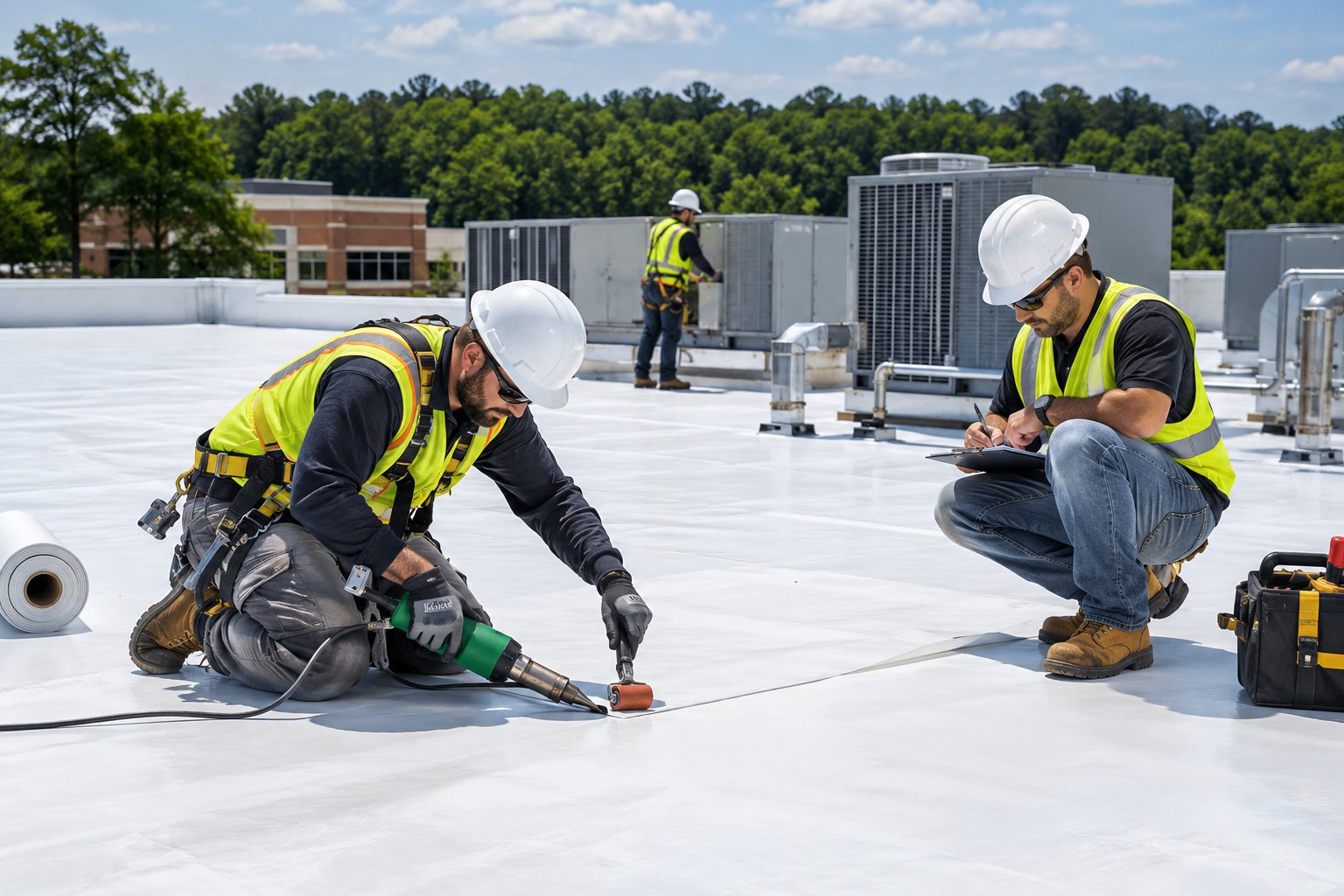
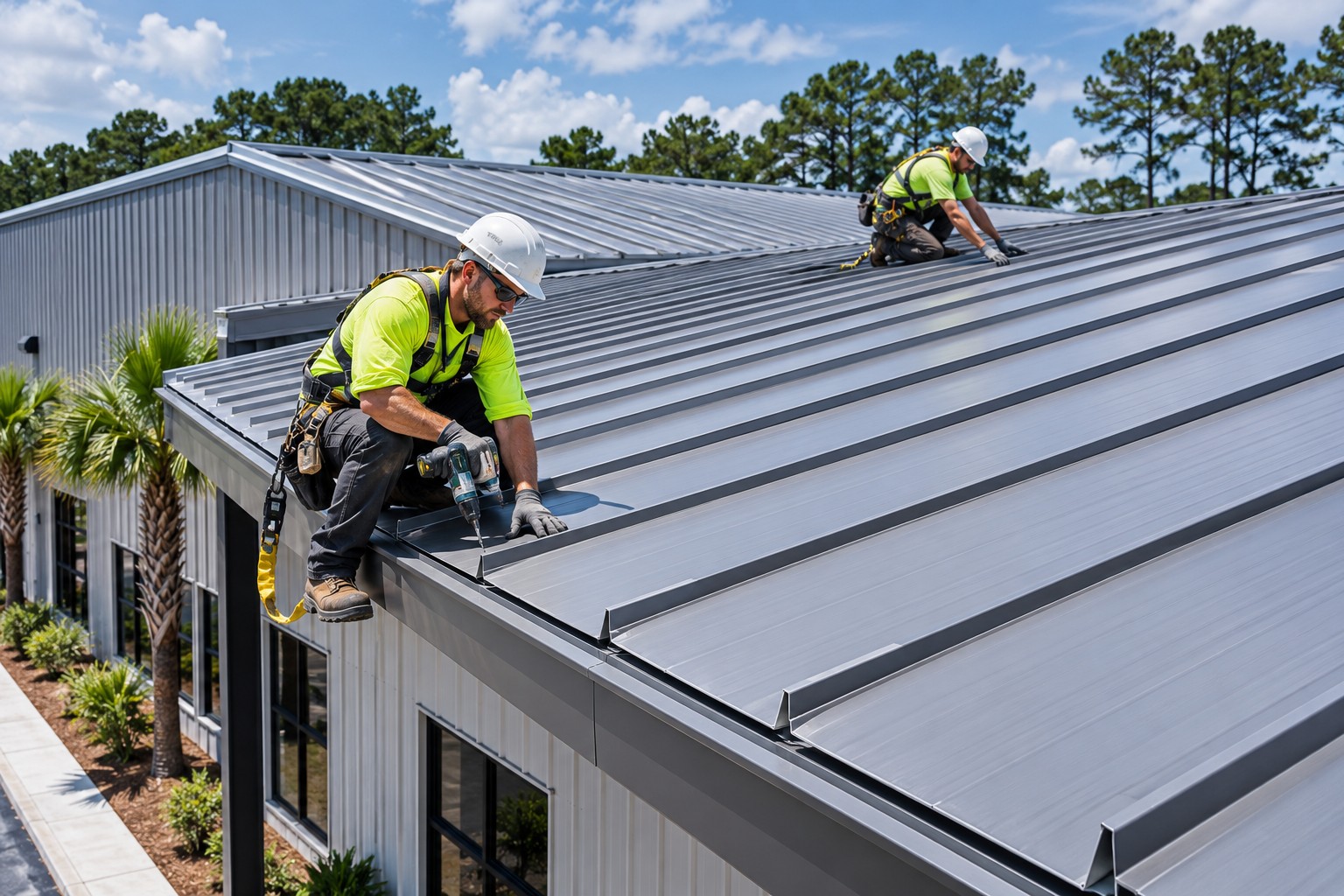
Commercial roofing covers flat and low-slope membrane roofs (TPO and EPDM), standing seam metal, multifamily and HOA shingle replacement, and ongoing repair and maintenance, all priced from a physical roof inspection and a written, itemized bid.
The right scope depends on the building, so match your property to the system that usually fits.
| Property Type | Common System |
|---|---|
| Retail strips and offices | TPO or EPDM membrane |
| Warehouses and industrial | TPO, EPDM, or standing seam metal |
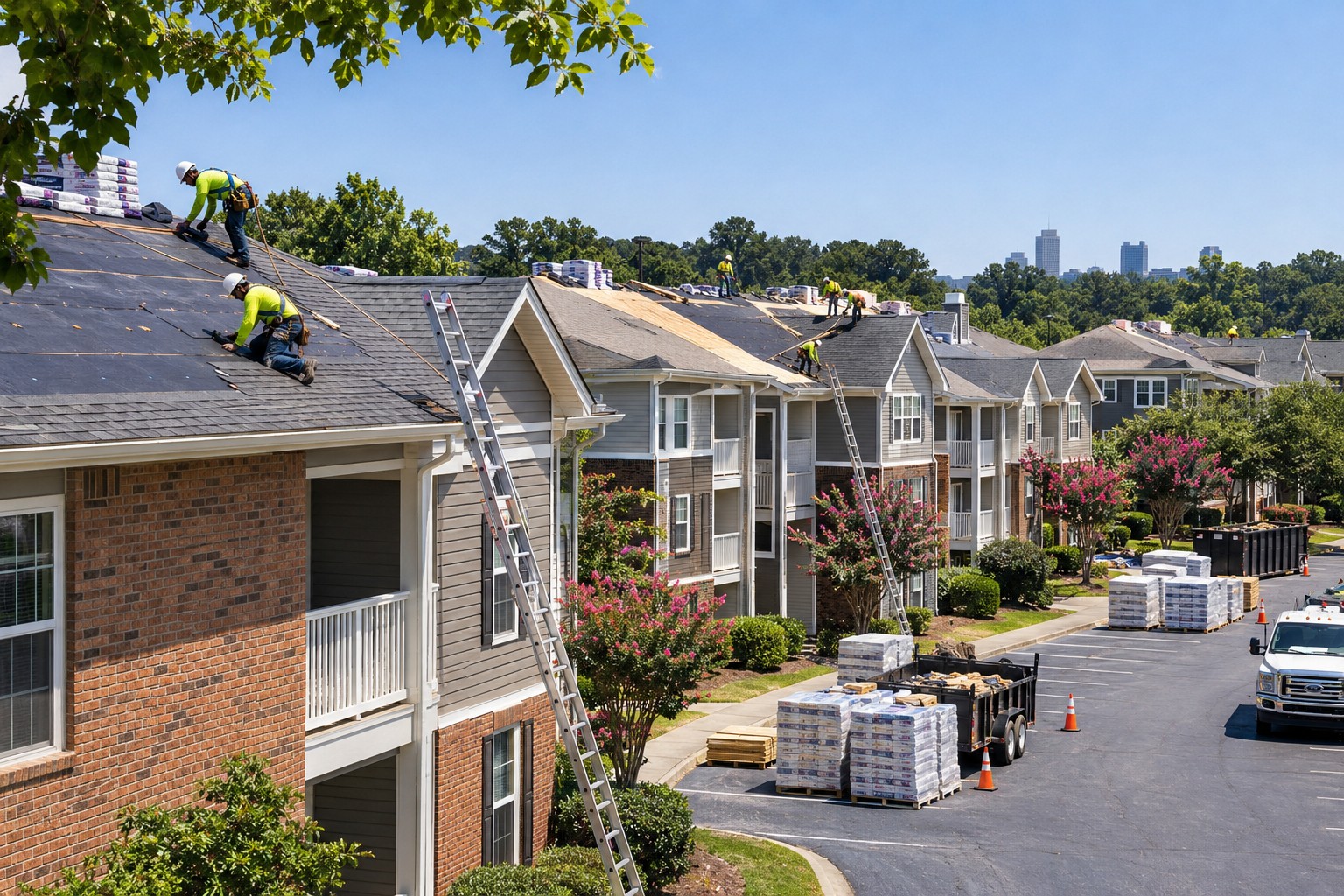
| Apartment complexes | Architectural asphalt shingles |
| HOA communities | Shingle or metal |
| Active leak, any building | Targeted repair |
Commercial Roofing Systems We Install
Tip Top Roofing brings the inspection discipline and manufacturer-guided methods behind our roofing services for homeowners to commercial and multi-unit buildings, then adds the scheduling and communication property managers depend on.
Commercial Roof Repair, Replacement, and Cost
Repair or Replace? How to Decide
| What We Find | Next Step |
|---|---|
| Isolated tear, failed flashing, one ponding area | Targeted repair |
| Repeated leaks across several areas | Compare repair and replacement |
| Wet insulation or soft decking | Replace affected layers or the system |
Waiting rarely saves money. Small leaks behind parapet walls can saturate decking and insulation, turning a membrane repair into a structural one.
Commercial Roofing Cost Factors
Pricing is set per building, and any bid given without walking the roof is a guess. These variables move the number:
- Square footage and roof access
- Deck and insulation condition
- System: TPO, EPDM, metal, or shingle
- Drainage, penetrations, and detail work
- Phasing and tenant scheduling
- New construction or additions, which call for new roof system installation
Insurance coverage depends on your policy and the documented cause of damage. For wind and hail damage claims, we provide timestamped photos, and your carrier makes the coverage decision.
Why Choose Tip Top Roofing
Tip Top Roofing has served North Carolina property owners since 1990, and the company’s history and team show in how projects run: the people who estimate your job stay involved through execution and quality control.
We do not use high-pressure sales tactics. You get an honest, physical inspection and clear, itemized options. Every engagement ends with a final walkthrough and cleanup, and if something unexpected turns up once old material comes off, we show you what we found before any added work begins. Hiring a licensed and insured contractor protects your property and liability, so ask any roofer for current documentation before work starts. Tip Top Roofing maintains North Carolina licensing and commercial insurance coverage.
To see completed work, browse our project gallery.
Commercial Roofing FAQs
What roofing systems work best for flat commercial roofs?
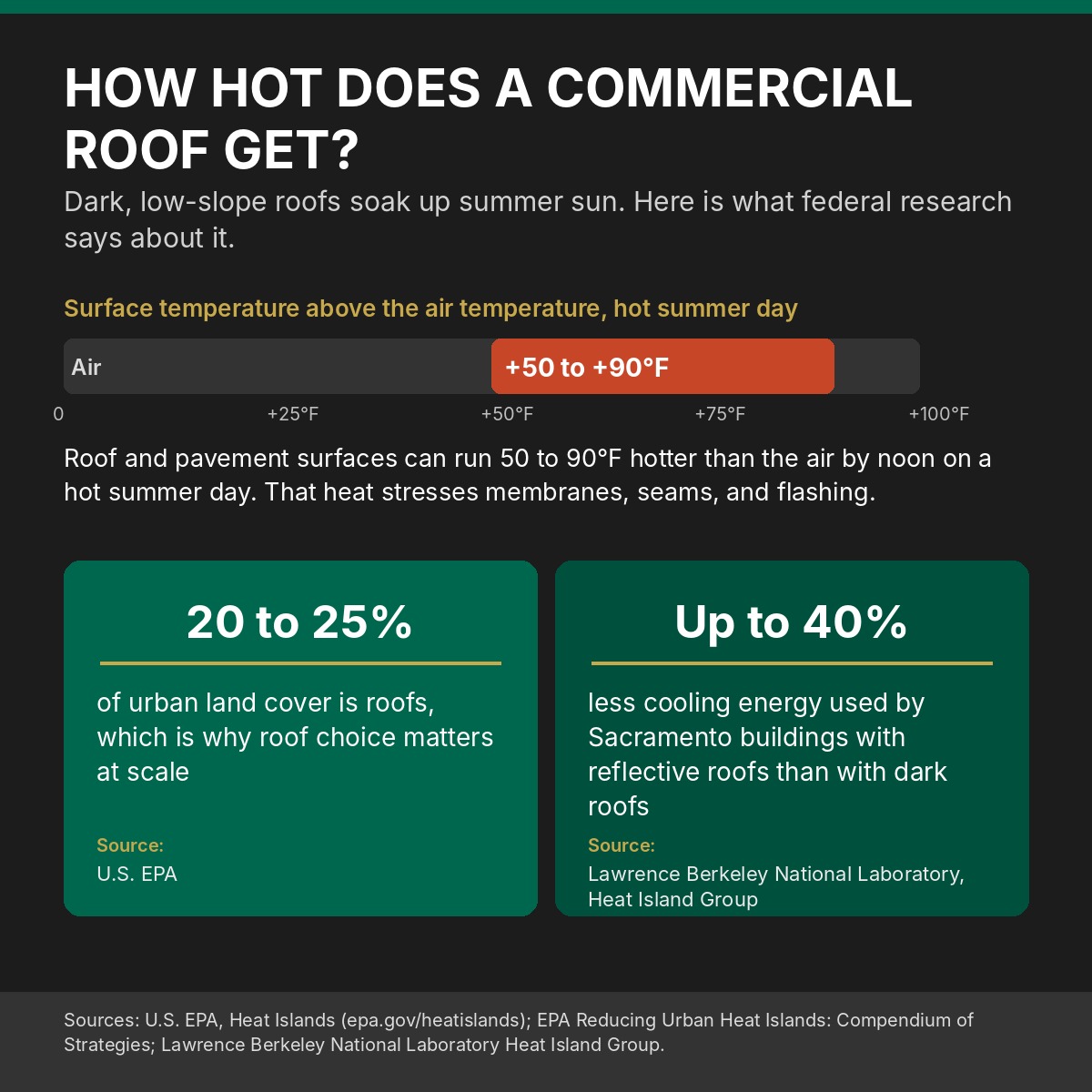
TPO and EPDM are the most widely used systems for flat and low-slope commercial roofs. TPO’s reflective surface helps reduce heat gain, while EPDM is valued for durability. An on-roof inspection tells us which fits your building.
How much does a commercial roof replacement cost?
Commercial roof replacement is priced per building, because square footage, deck and insulation condition, system choice, and drainage details all change the total. A physical inspection and itemized bid give you the real number instead of a rough guess.
Is TPO or EPDM better for a commercial roof?
Neither wins in every case. TPO suits buildings with rooftop equipment where cooling costs matter, and EPDM suits large, simple roofs where durability and budget lead. Seam quality and flashing detail matter more than the membrane name.
How often should a commercial roof be inspected?
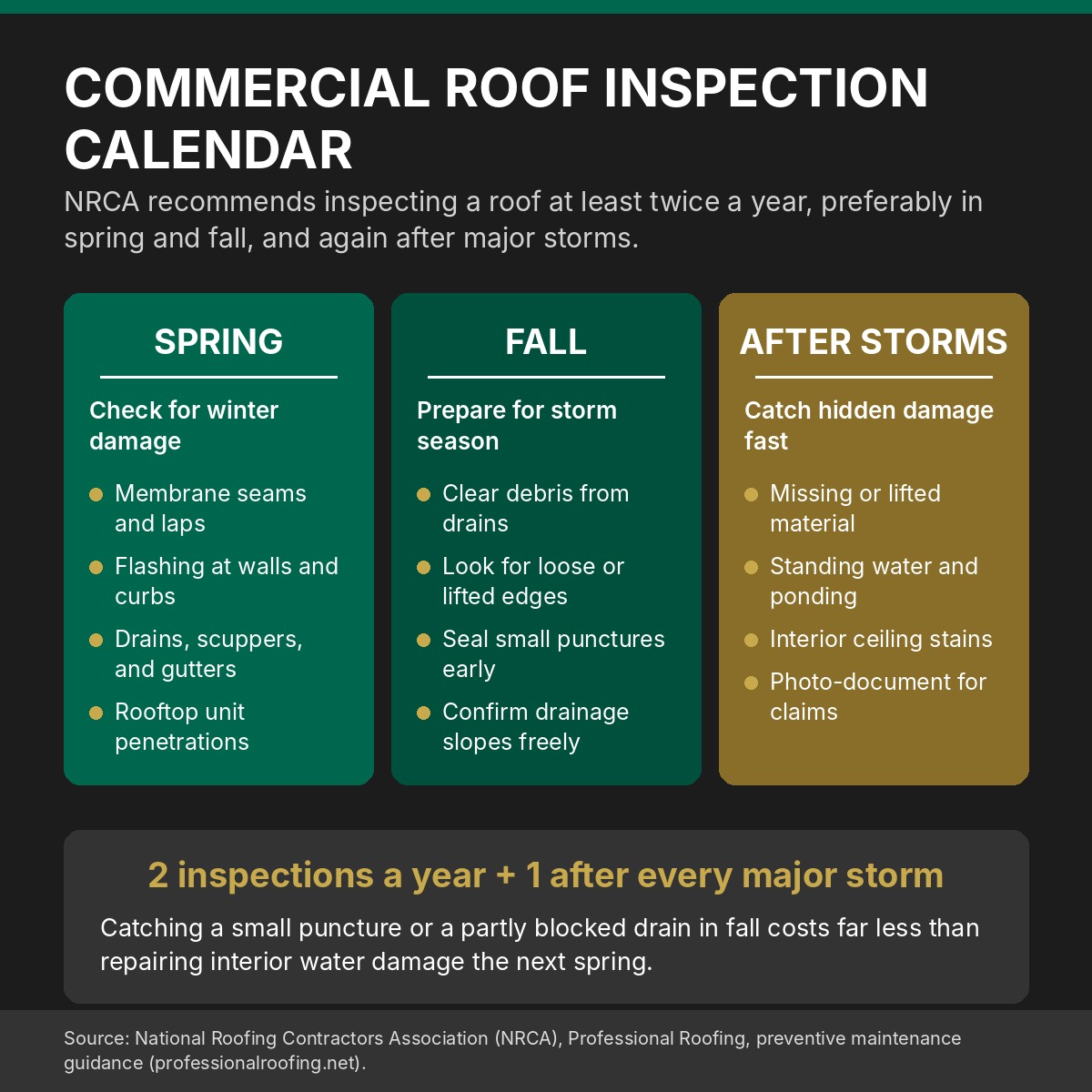
At least twice a year, preferably in spring and fall, plus after any major storm, which matches National Roofing Contractors Association guidance. Storms can stress seams and drains in ways you cannot see from the ground.
How do you limit disruption during an apartment roof replacement?
We agree on a communication plan with the property manager before work starts, including staging areas, parking restrictions, safety barriers, advance resident notices, and a predictable daily schedule.
What warranties are available?
As a CertainTeed ShingleMaster Pro™, Tip Top Roofing can offer warranty options up to 50 years on qualifying shingle installations. Membrane and metal warranties vary by manufacturer and system, and we put the terms in writing before you sign.
Can you help our HOA board plan and present a roofing project?
Yes. We provide a photo-documented inspection, a detailed written estimate, and plain explanations of material options, so the board can present the project to homeowners, compare timelines, and make an informed decision before costs escalate.
Does insurance cover commercial roof repair or replacement?
It depends on your policy language and the documented cause of damage. We provide timestamped photo documentation of the damage and its probable origin to support your claim, but your carrier makes the coverage decision and we never promise what insurance will pay.
Do you work on new construction and building additions?
Yes. New builds and additions need a roof system designed from scratch, and we install TPO, EPDM, standing seam metal, and shingle systems following manufacturer guidelines, with decking, insulation, and drainage planned before the first panel or membrane goes down.
Schedule Your Commercial Roof Inspection
Property owners, facility managers, and HOA boards can call (336) 922-3325 for a documented inspection and itemized bid with no obligation. Behind every project is the team at Tip Top Roofing, focused on doing the job right from first walkthrough to final cleanup.
Wondering whether we cover your property? Browse the communities we serve to find your area.
Directions and local details for the Kernersville office are easy to find.
Property owners closer to the coast can find the same information at the Point Harbor office.
Ready to move forward? Request your commercial roofing estimate online.