


Real Estate Roof Inspection Services
Buying or selling a home comes with a lot of moving parts, and the condition of the roof plays a major role. Our real estate inspections provide clear, unbiased information that supports confident decisions.
| Who We Help | What They Get |
|---|---|
| Homebuyers | A clear picture of the roof’s condition before closing |
| Sellers | Documented condition and repair priorities before listing |
| Real estate agents | Reliable, photo-backed reports for their clients |
| Property managers and HOAs | Consistent condition reports across multiple properties |
Our detailed reports include photos, notes, and recommendations. If repairs or a complete tear-off and new roof are needed, we walk you through the options.
What We Look for During an Inspection
A thorough inspection goes beyond a quick visual check. We examine every major component of your roofing system so nothing is overlooked.
| Component | What We Check |
|---|---|
| Roof surface | Shingles, tiles, or metal panels for wear, cracking, and damage |
| Flashing | Seals around chimneys, vents, and skylights |
| Drainage | Gutters and downspouts for proper flow |
| Attic | Ventilation and signs of moisture buildup |
| Structure | Sagging, rot, or other structural concerns |
Because we look at the whole system, we also check the condition of your gutters and downspouts to confirm water is leaving the roof as it should.
Attic conditions matter too, so we note the state of your attic airflow and any signs of moisture, giving you a complete picture of your roof.

Supporting Insurance Claims with Accurate Reports
Storms with strong winds and heavy rain can move through quickly, and if your home has experienced damage, a professional inspection is an important step in the insurance process. We provide:
- Detailed documentation of damage
- Clear condition reports with photos
- Support for filing insurance claims
When the findings call for work, our crews can handle repair after wind or hail damage. Our goal is to give you the information you need to move forward with confidence.
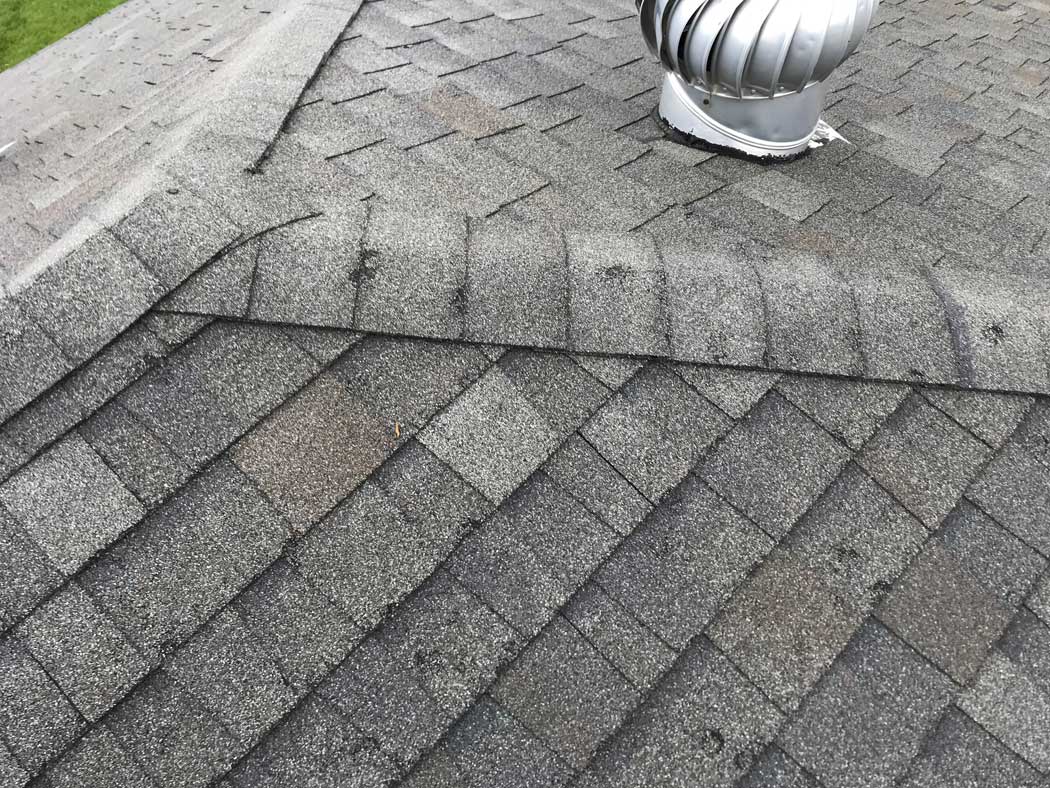
What the Research Says About Roof Inspection
Industry research explains why a close look at your roof pays off. These two references from the National Roofing Contractors Association show what age does to shingles and how often a roof should be checked.
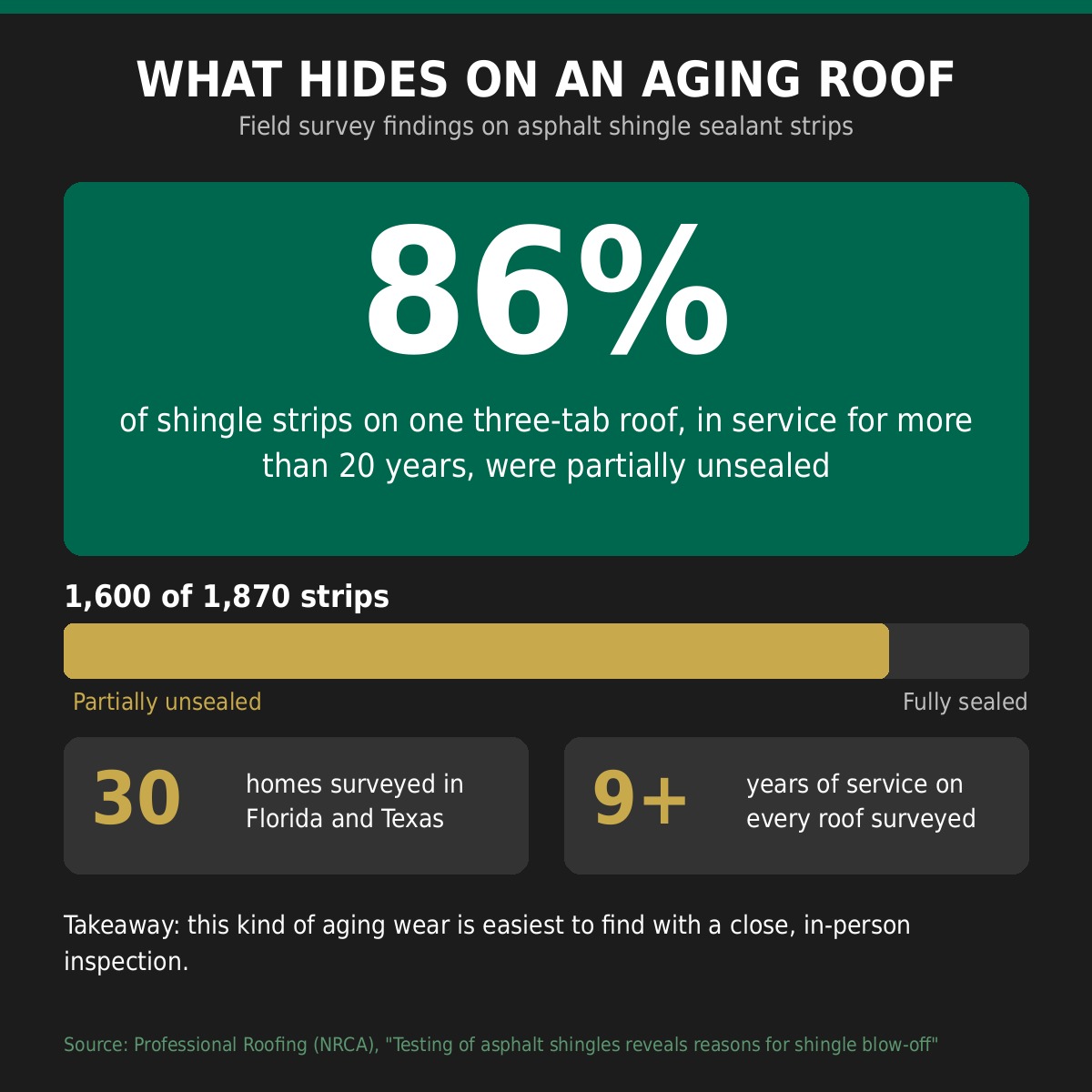
Why Roof Inspection Finds What You Cannot See
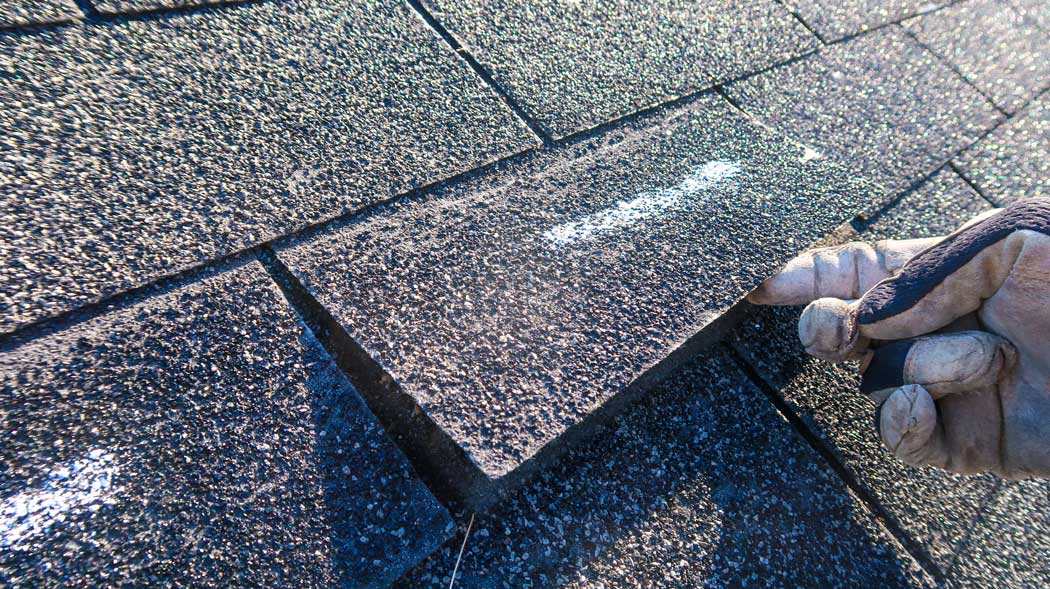
In field surveys of 30 homes with roofs more than nine years old, researchers checked whether asphalt shingles were still sealed along their adhesive strips. On one three-tab roof in service for over 20 years, about 86 percent of the strips were partially unsealed. Unsealed shingles are more vulnerable to wind, and this kind of wear is easiest to find with a close, in-person look.
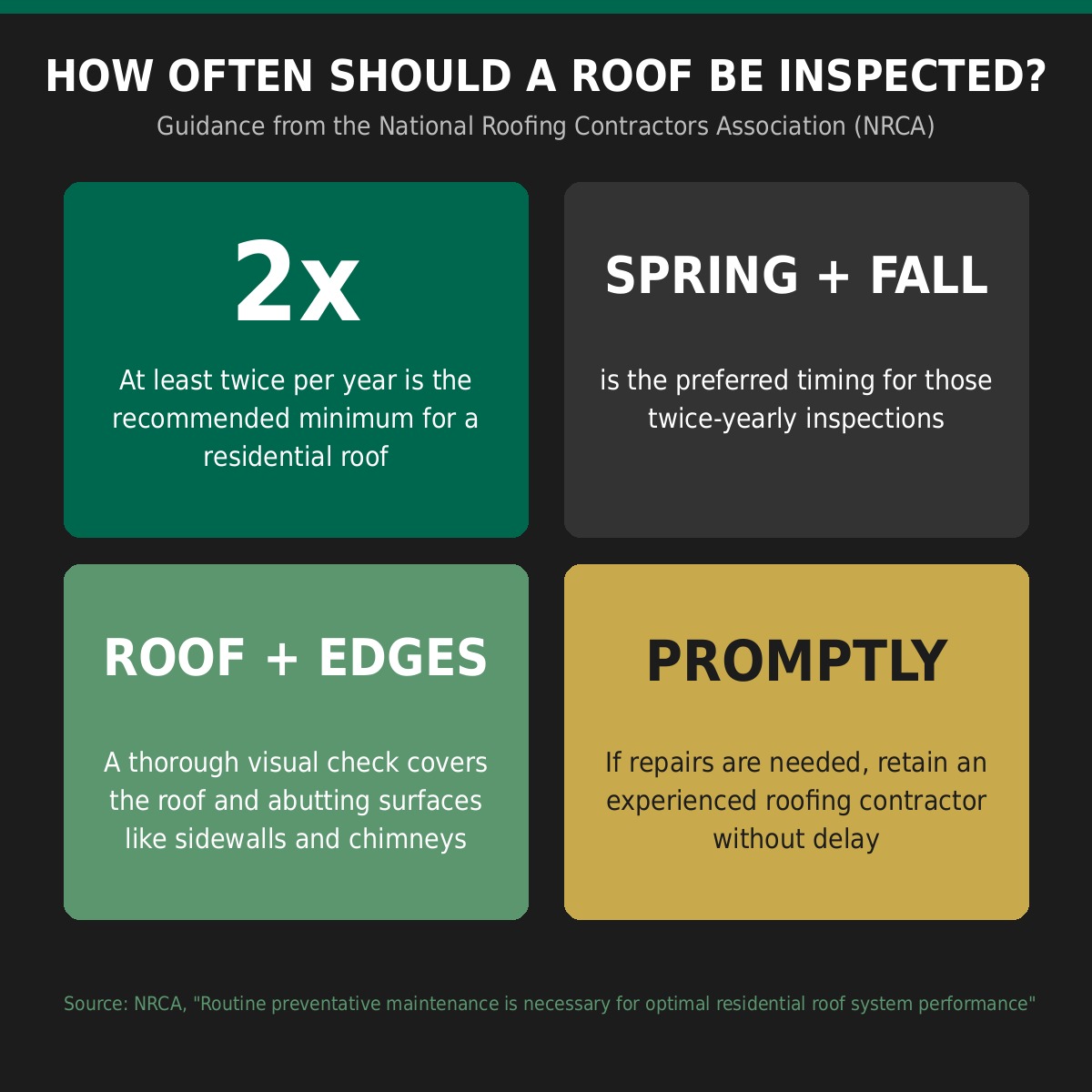
How Often to Schedule a Roof Inspection
The National Roofing Contractors Association recommends inspecting a residential roof at least twice per year, preferably in spring and fall. A proper check covers the roof and the surfaces that meet it, including sidewalls and chimneys, and any needed repairs should go to an experienced roofing contractor promptly. We can serve as that second set of eyes, whether you inspect on your own between visits or prefer to leave it to us.
What Your Roof Inspection Report Includes
An inspection is only useful if the findings are clear. After every visit you receive a written report you can keep, share with an agent or insurer, and use to plan your budget. It typically includes:
- Photos of the roof surface, flashing, and any problem areas
- Notes on the condition of each major component
- A plain-language summary of what needs attention now and what can wait
- Recommendations for repair, maintenance, or replacement, with options
Because the report ranks priorities, you can decide what to fix first, what to monitor, and what to plan for in the coming years without feeling pressured into work you do not need.
Signs It Is Time to Schedule a Roof Inspection
You do not have to wait for a leak to call. Any of the following is a good reason to schedule an inspection soon:
- Shingles that are missing, cracked, curling, or buckling
- Granules collecting in your gutters or at the downspouts
- Water stains on ceilings or walls, or a musty smell in the attic
- A roof that has weathered a major storm since its last inspection
- A pending home sale, purchase, or insurance renewal
If none of these apply, a routine inspection once or twice a year is still the most reliable way to protect your investment and avoid surprises.

Experience That Makes a Difference
With more than three decades on real roofs, we know what to look for: moisture buildup from humidity, debris from nearby trees, and wear that hides at flashing and seams. Learn more about our team and credentials.
That experience lets us provide inspections that are thorough and relevant to the conditions your home actually faces. We take the time to explain each finding in everyday language, show you photos of what we see, and answer your questions before we leave, so you understand your roof as well as we do.

Honest, Straightforward Recommendations
One of the most important parts of any inspection is knowing what comes next. We give you honest feedback about your roof’s condition and clear recommendations for any necessary work.
Whether your roof is in great shape or needs attention, we make sure you understand your options so you can make the best decision for your home.
Frequently Asked Questions
The National Roofing Contractors Association recommends inspecting a residential roof at least twice per year, preferably in spring and fall, and again after major storms. At a minimum, a professional annual inspection helps catch issues early and keeps a record of your roof’s condition.
Our inspections cover shingles or other roofing material, flashing, gutters, attic ventilation, and structural elements, followed by a detailed condition report with photos and recommendations.
Yes. We provide inspections for buyers, sellers, agents, property managers, and HOAs to support property transactions with clear, unbiased information.
Yes. We provide documentation and photo reports that can support a storm damage claim, and if repairs are needed our crews can help with that as well.
Most inspections can be completed in a short visit, depending on the size, pitch, and condition of the roof. We will give you a realistic window when you schedule.
Yes. Wind, hail, and falling limbs can cause damage that is not visible from the ground, so a prompt inspection is a smart step even if the roof looks fine.