

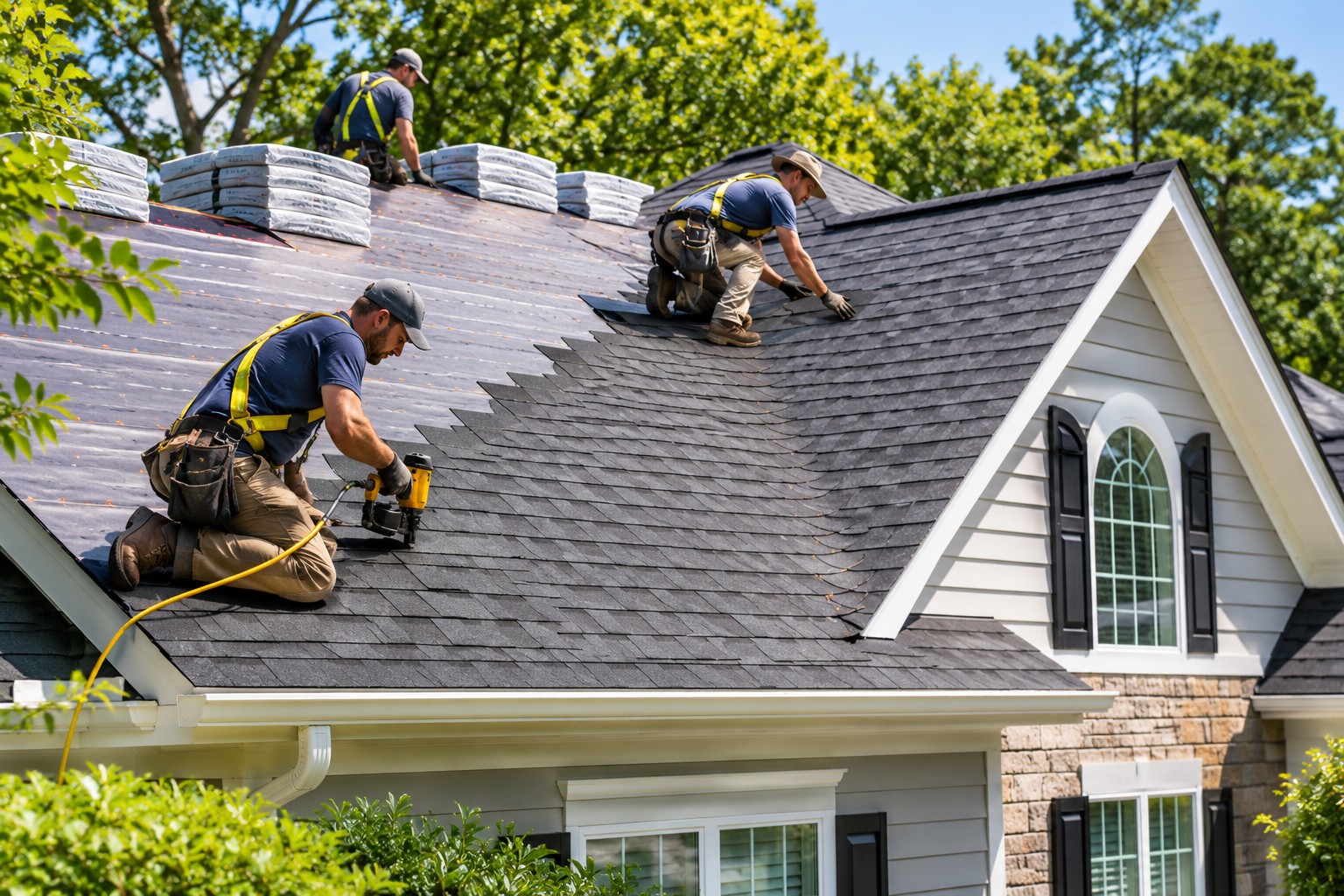
How long does a roof replacement take? Most asphalt shingle roof replacements on a typical home take one to three days, depending on roof size, layout, material, and weather. Hidden decking damage and storm delays are the two things most likely to stretch the schedule.
Knowing what drives the timeline lets you plan around it. This guide covers typical durations by roof type, what happens from tear-off to final cleanup, how weather changes the schedule, and how to prepare your home so the job moves quickly.
How Long Does a Roof Replacement Take on an Average Home?
A standard residential roof replacement usually takes one to three days. Most asphalt shingle installations on a typical single-family home finish in one day, while larger, steeper, or more complex roofs take two to three. Storms and decking repairs can add days.
| Roof Scenario | Typical Timeline | What Drives It |
|---|---|---|
| Average home, asphalt shingles, simple layout | About 1 day | Lightweight material and a well-established sequence |
| Larger or complex roof with valleys, dormers, chimneys | 2 to 3 days | Detailed flashing at every penetration |
| Steep pitch | Adds time | Safety harnesses and a slower pace |
| Metal or wood shake roofing | Often adds a day or more | Precise seaming, fastening, and alignment |
| Rotted or damaged decking found at tear-off | Adds hours to days | Boards must be replaced before new roofing goes on |
| Rain, high wind, or freezing weather | Pauses work | Safety and water intrusion risk |
How Long Does a Roof Replacement Take by Material?
Asphalt shingles are the fastest to install by a meaningful margin, because the product is lightweight and a seasoned crew covers a lot of square footage per hour. Metal panels need precise seaming and fastening, and wood shakes need careful alignment and spacing to manage moisture. Either can add a full day or more depending on the roof’s footprint.
Speed matters for another reason. Once the old shingles come off, the bare deck is exposed, so a faster install means less time at risk if a pop-up storm arrives.
What Affects How Long It Takes to Replace a Roof?
Total square footage, roof pitch, the number of valleys and penetrations, decking condition, and weather all set the pace. The least predictable of these is what the crew finds under the old shingles.
Roof Size and Complexity
Larger roofs take longer, and so do roofs with multiple valleys, dormers, skylights, or chimneys that need detailed flashing at each penetration. A simple gable roof moves much faster than a cut-up roofline of the same square footage.
Roof Pitch
Steep roofs require harnesses and a more deliberate pace across the surface, which naturally extends installation time.
Hidden Decking Damage
Rotted plywood, soft spots from long-standing leaks, and boards weakened by ice dam water are invisible until tear-off exposes the deck. Damage can range from a few isolated boards to whole sections. Decking repair is not optional, because new shingles over a weak deck shorten the new roof’s life and can put manufacturer warranties at risk. This is why professional roof repair and decking work is part of a proper replacement rather than an afterthought.
The most reliable way to build an accurate timeline is a professional roof inspection before you commit. It identifies likely decking issues and gives you a schedule specific to your home.
What Happens During a Roof Replacement?
A professional replacement follows a set sequence: property protection, tear-off, deck inspection and repair, waterproofing and underlayment, shingle and flashing installation, and a final cleanup. On a standard home, the whole sequence typically fits in one working day.
| Stage | What Happens |
|---|---|
| 1. Setup and protection | Crew stages equipment and covers landscaping, decks, and patios near the roofline |
| 2. Tear-off | Old shingles and underlayment are stripped to the deck and loaded into a truck or dumpster |
| 3. Deck inspection and repair | Bare boards are checked for rot and soft spots, and damaged boards are replaced |
| 4. Waterproofing and underlayment | Ice and water shield goes along eaves, valleys, and penetrations, then synthetic underlayment covers the deck |
| 5. Shingles, flashing, and vents | New shingles go on from the eaves up, with starter strips, flashing, and ridge vents at every transition |
| 6. Cleanup and final check | Tarps come off, debris is hauled away, and a magnetic sweep collects stray nails from the yard and driveway |
Tear-off is the loudest, most disruptive part, and it also exposes what the old roof was hiding: rotted boards, weak flashing, and places where moisture got through. The ridge vents installed in step five matter beyond the roof surface, since balanced attic airflow affects shingle life and attic moisture. For the full scope of a project, see our complete tear-off and reroofing service.
How Does Weather Affect a Roof Replacement Schedule?
Weather is the most uncertain variable in any roof replacement. Rain, lightning, high wind, and temperature extremes can pause work, delay a start date, or change how shingles are installed. A reputable crew schedules around the forecast and will not rush a job past unsafe or poor conditions.
Rain and Storms
Opening a roof in the rain risks water intrusion, so any real chance of precipitation delays a start or pauses active work. Lightning adds a safety rule. The National Weather Service advises going indoors when thunder is heard and waiting 30 minutes after the last thunder before going back outside, and it notes lightning can strike up to about 10 miles from the base of a storm. A crew that hears thunder stops, tarps the open deck, and waits.
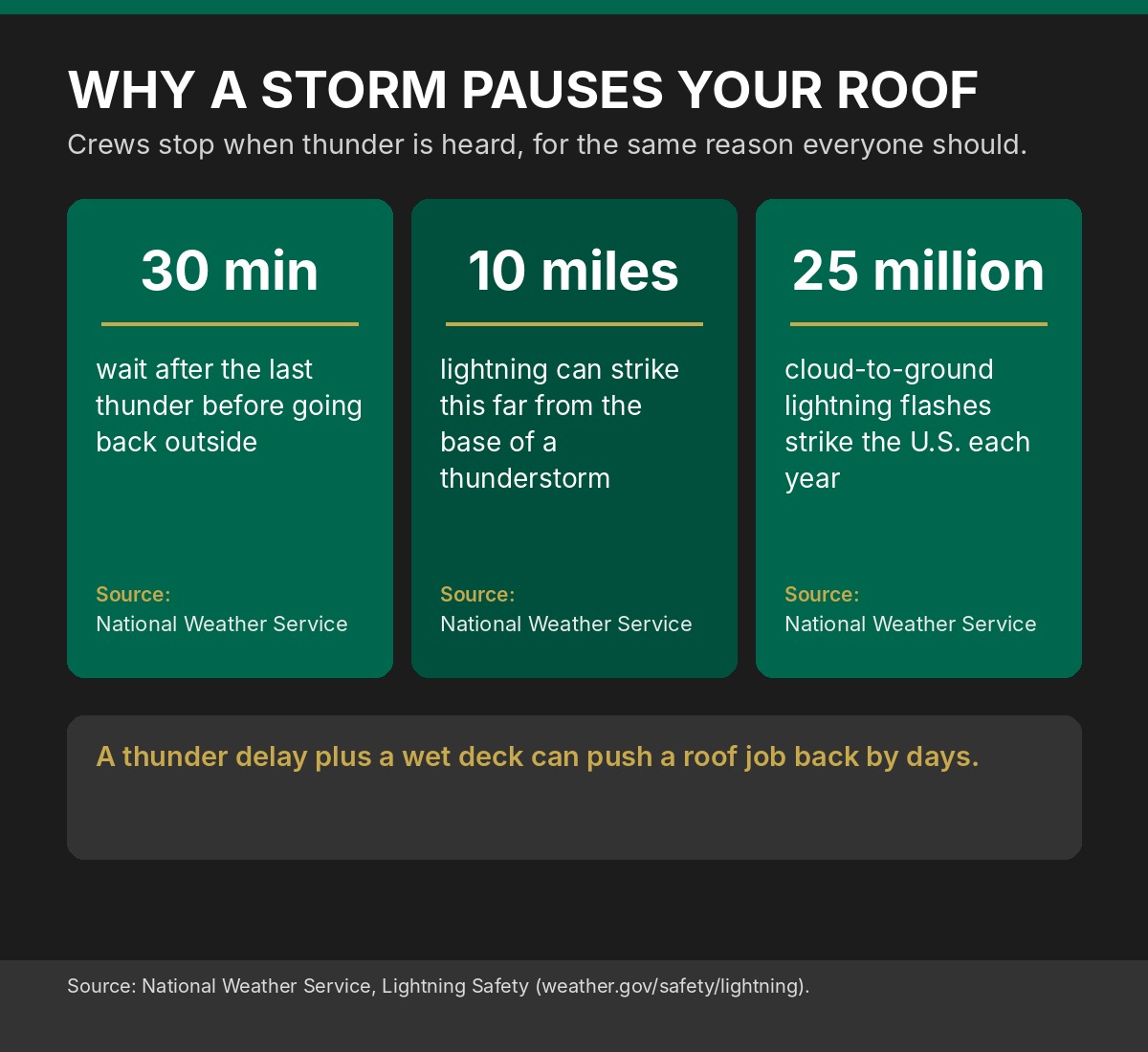
If a storm hits mid-project, a trained crew can tarp the open deck quickly and should contact you proactively with an updated schedule. For storm-caused problems that come first, see our storm damage repair options.
Cold and Hot Temperatures
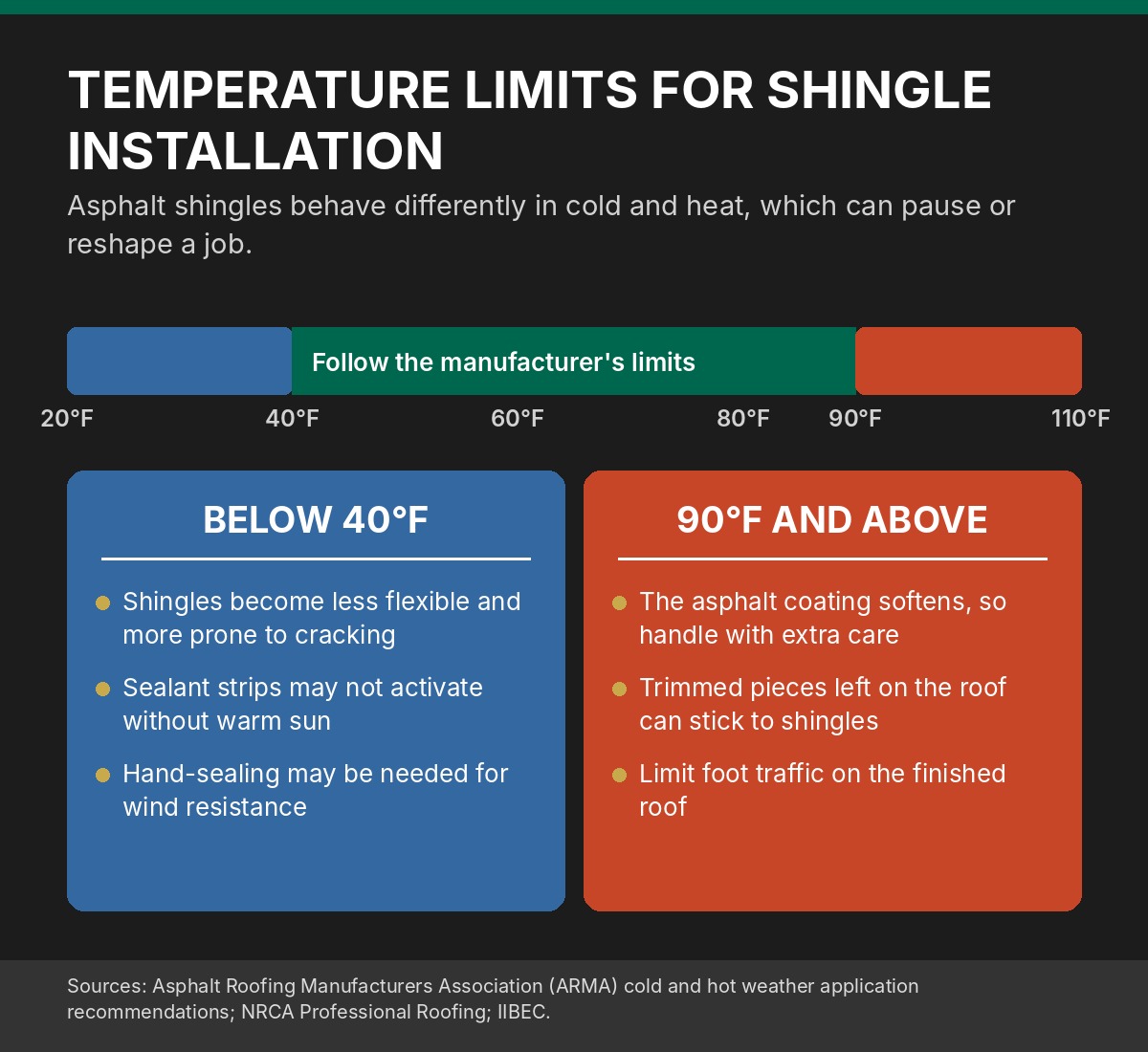
Temperature changes how asphalt shingles handle. The Asphalt Roofing Manufacturers Association advises following the manufacturer’s cold-weather instructions, because shingles become less flexible as temperatures fall and the thermally activated sealant strips may not bond right away. Professional Roofing magazine reports that shingles become less flexible and more prone to cracking below 40°F, and in very cold weather shingles can be hand-sealed with approved roofing cement. In heat, ARMA notes the asphalt coating softens, so crews should avoid rough handling and keep trimmed pieces from sticking to the roof, as described in its hot weather guidance.
| Condition | Effect on the Job |
|---|---|
| Rain | Delays the start or pauses work to keep the deck dry |
| Thunder or lightning | Work stops, with a 30-minute wait after the last thunder |
| High wind | Makes handling shingles and ladder work unsafe, and can affect how shingles seat |
| Cold, below about 40°F | Shingles less flexible, sealant slower to bond, hand-sealing may be used |
| Extreme heat | Softer shingles need careful handling, and finished roofs need limited foot traffic |
How to Prepare Your Home for a Roof Replacement
Preparing your home helps prevent damage and keeps the schedule on track. Clear the driveway, move items away from the roofline, secure fragile items indoors, and keep children and pets inside during tear-off.
Outside the House
- Move patio furniture, grills, and potted plants away from the roofline
- Clear the driveway completely so trucks and debris containers can park close
- Trim low branches that block ladder placement or catch falling debris
- Move vehicles out of the work area before the crew arrives
Inside the House
- Remove framed pictures, mirrors, and shelf items from walls below the roof, because hammering vibration travels through the structure
- Cover or move belongings stored in the attic, where dust can shake loose
- Tell your alarm monitoring company that construction is planned, since vibration can trigger motion sensors
- Keep children and pets indoors and away from the loudest phases
How to Keep Your Roof Replacement on Schedule
You cannot control the weather, but you can control several things that affect duration. A pre-job inspection, decisions made early, and clear access remove the most common sources of delay.
- Get an inspection first: It surfaces likely decking problems before they become surprises on the day.
- Choose materials and colors early: Late changes can delay delivery and the start date.
- Ask about permits: Requirements vary by jurisdiction, so ask your contractor how permitting is handled and how long approval takes.
- Keep dates flexible: Allow a few buffer days around the forecast so the crew can pick the best weather window.
- Prepare the property: A clear driveway and moved belongings let the crew start on time.
Roof Replacement Timeline FAQs
How long does a roof last before it needs replacement?
Many asphalt shingle roofs last roughly two decades or more, but lifespan depends on material quality, climate, ventilation, and maintenance. Metal and some other materials often last longer. A professional inspection is the most reliable way to judge where your roof stands.
Should a 20-year-old roof be replaced?
A 20-year-old asphalt shingle roof is approaching the end of its typical service life, but age alone does not decide it. Curling shingles, heavy granule loss, and recurring leaks are stronger signs. An inspection tells you whether repair or replacement makes sense.
Is there a 25% rule for roof replacement?
The 25% rule is a specific provision in the Florida Building Code, not a universal rule, and Florida has since modified how it applies. Other states and cities handle partial re-roofing differently, so ask your local building department or your contractor what applies to your home.
Can a roof be replaced in one day?
Yes, many standard asphalt shingle roofs are completed in a single day when the weather cooperates and the decking is sound. Larger, steeper, or more complex roofs, and jobs that uncover major rot, often take two to three days.
Do I need to be home during a roof replacement?
Usually not for the whole job, but you should be reachable. The crew may need access to the driveway, attic, or exterior outlets, and may need a decision if hidden damage turns up. Keep pets and children indoors and away from the work zone.
What is the most expensive part of a roof replacement?
Materials and labor are the two largest cost components, and their share varies with the roof’s size, pitch, complexity, and the material chosen. Decking repairs and tear-off add to the total. A written, itemized estimate shows exactly where the money goes.
What insurance should a roofing contractor carry?
Ask for current proof of general liability insurance and workers’ compensation coverage before work starts. A reputable contractor provides certificates without hesitation, and that protects you if an accident or property damage occurs.
Get a Realistic Timeline for Your Roof
A roof replacement is a major project, but the disruption is manageable when the contractor communicates clearly, protects your property, and cleans up thoroughly. The right timeline depends on what an inspection finds.
The team at Tip Top Roofing will examine your roof, lay out your repair and replacement options, and let you make the final call, with no pressure. Request your roof inspection or call (336) 922-3325.