

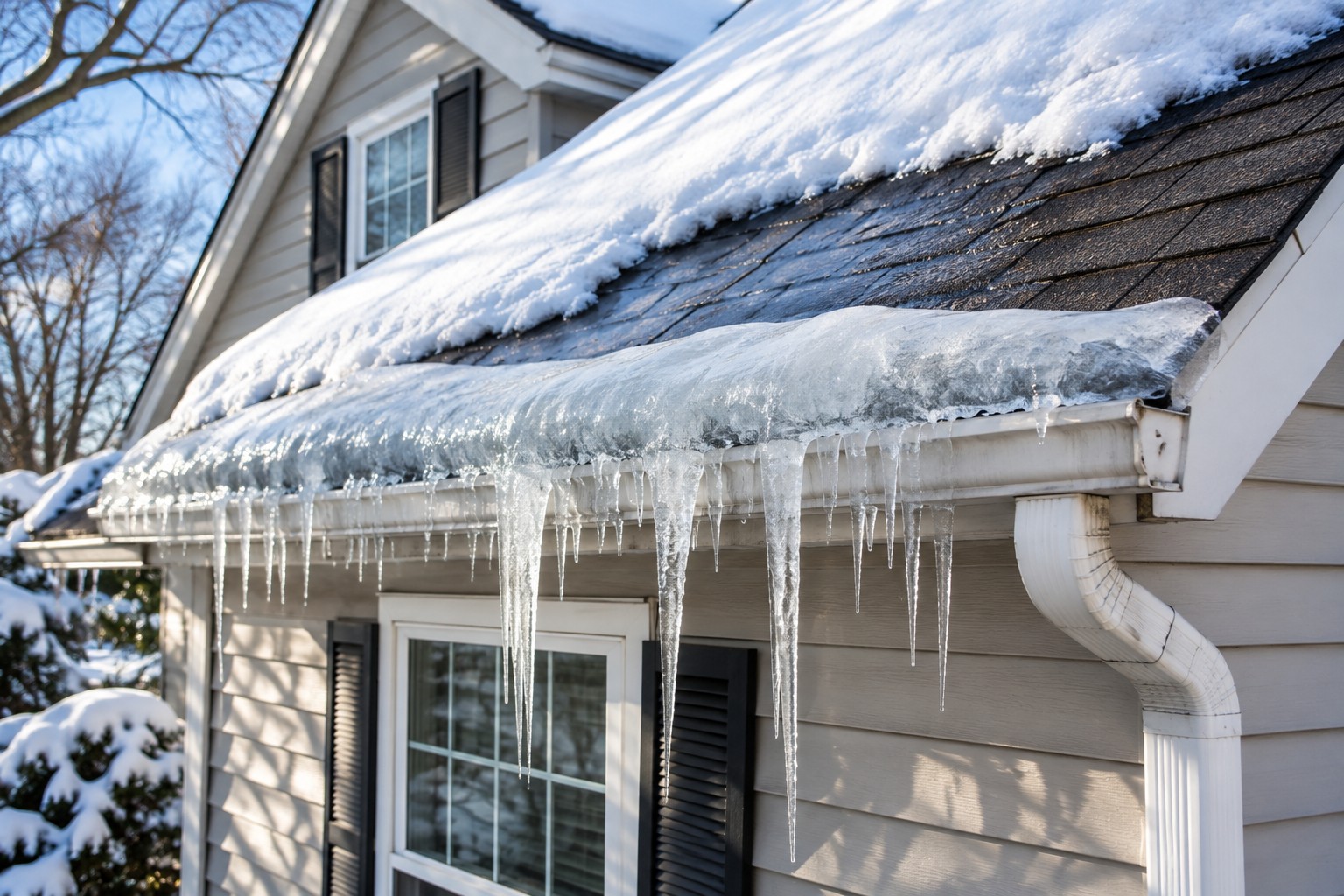
Knowing how to prevent ice dams on your roof comes down to one fix: stop heat from escaping into the attic. Seal air leaks, add insulation, and balance ventilation so the roof deck stays as cold as the outdoor air and snow melts evenly. Rakes, salts, and heat cables only treat the symptom.
Ice dams look like a roof problem, but they are a whole-house heat problem. This guide explains what causes them, the order of fixes that works, why quick fixes fail, how to remove an active dam safely, and when to bring in a professional.
What Is the Best Way to Prevent Ice Dams on a Roof?
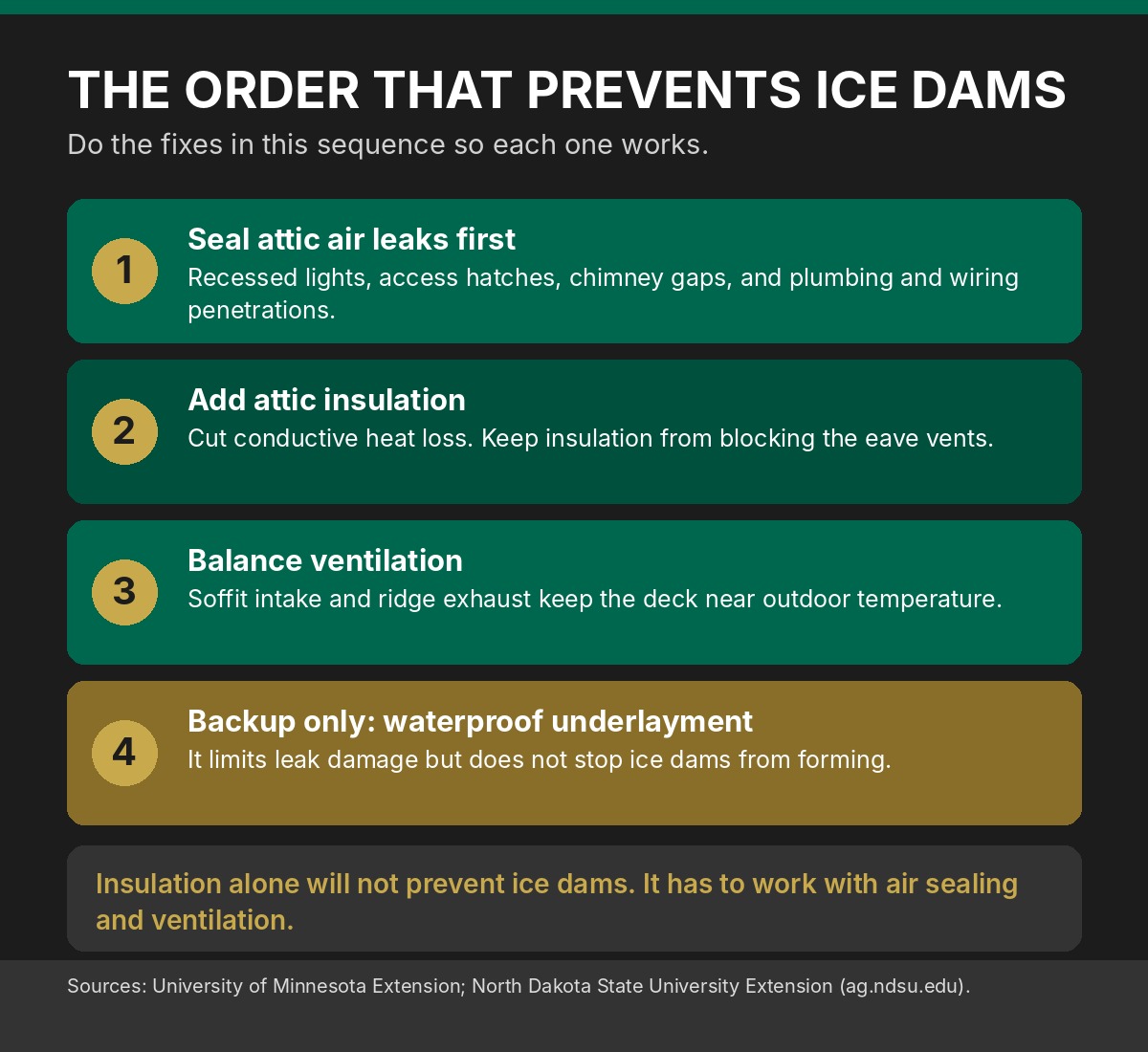
The best way to prevent ice dams is to keep the roof deck uniformly cold by addressing attic heat loss. Seal air leaks between the living space and the attic first, then add insulation, then confirm balanced ventilation. Doing only one of the three rarely solves the problem.
| Step | What It Does | Why It Comes in This Order |
|---|---|---|
| 1. Air sealing | Stops warm air from reaching the attic | Leaks bypass insulation entirely |
| 2. Insulation | Slows heat conducted through the attic floor | Works only once air leaks are closed |
| 3. Ventilation | Flushes residual heat from under the deck | Removes what sealing and insulation cannot stop |
| 4. Waterproof underlayment (optional) | Limits leak damage if water backs up | A backup, not a prevention method |
What Causes Ice Dams on a Roof?
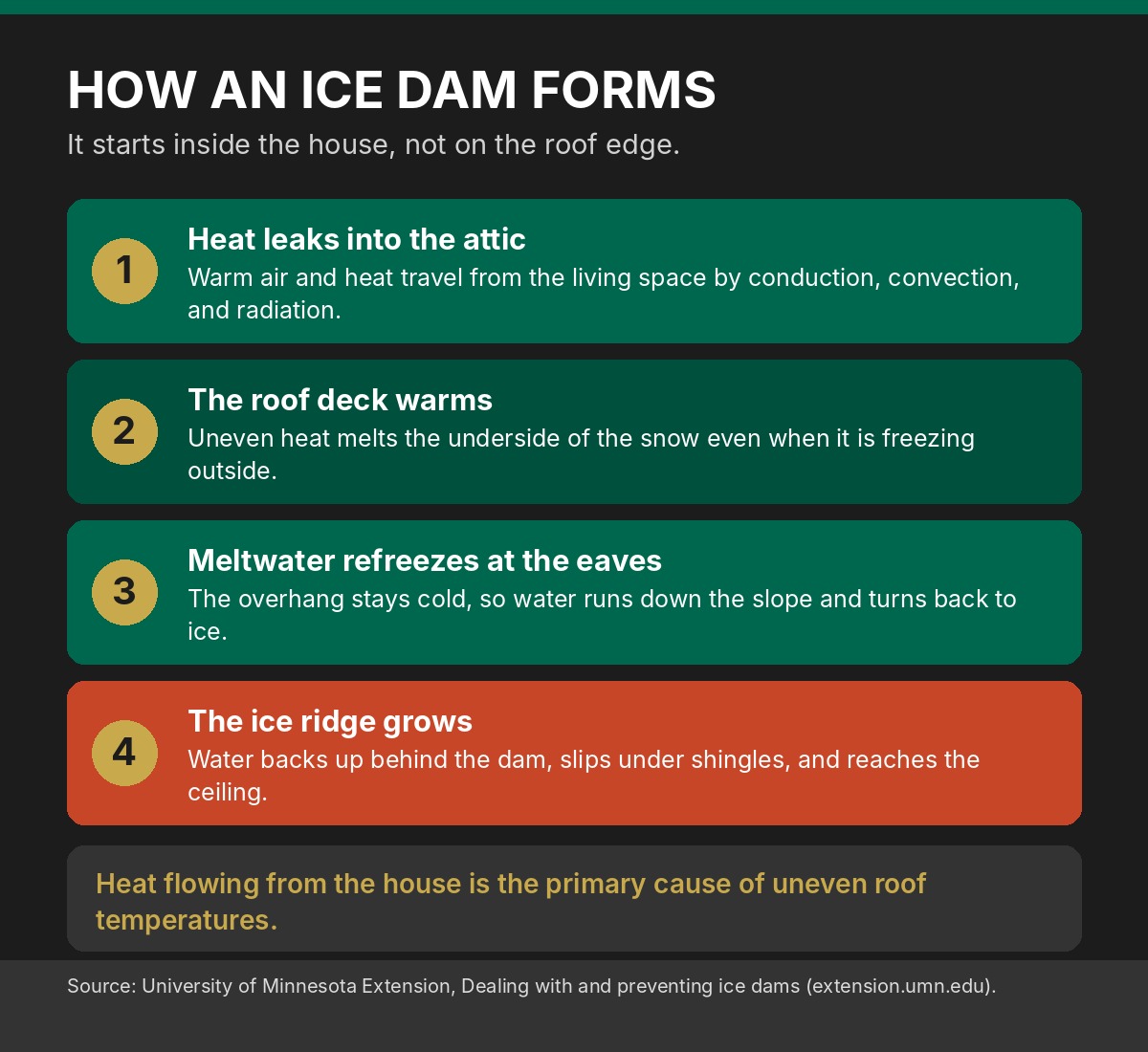
Ice dams form when heat from the house warms part of the roof, melting the underside of the snow. The meltwater runs down to the cold eaves, which extend past the heated space, and refreezes into a ridge of ice that blocks further drainage.
How an Ice Dam Forms, Step by Step
Heat reaches the roof from the living space through conduction, convection, and radiation. Warm air rises through gaps around light fixtures, plumbing, attic hatches, and framing, then heats the roof deck from below. Snow melts at its base even when it is well below freezing outside. Over several freeze and thaw cycles, the refrozen water builds a thick dam that can force water under shingles and into the home. The University of Minnesota Extension identifies heat flowing from the house as the primary cause of the uneven roof temperatures behind ice dams.
Clogged Gutters Do Not Cause Ice Dams
Clogged gutters can hold ice and make the visible problem worse, but they do not create the temperature difference that drives ice dam formation. A roof with spotless gutters will still form dams if the attic leaks heat. Clearing debris is still good maintenance, and routine gutter cleaning and repair helps meltwater drain, but the fix for ice dams starts inside the attic.
What Raises Your Risk
- Recessed lights that are not airtight or insulation-rated
- Unsealed attic hatches and pull-down stairs
- Heating ducts and exhaust fans running through the attic
- Uninsulated chimneys and flues
- Complex rooflines and skylights, which create more places for heat to escape
How to Prevent Ice Dams on Your Roof for Good
Lasting prevention works on the three layers of the roof system together: an air barrier stops warm air from moving up, insulation slows heat conduction, and ventilation carries away whatever heat remains. When all three work, the deck stays uniformly cold and snow melts evenly.
How to Prevent Ice Dams on Your Roof: Start With Air Sealing
Air bypasses are unsealed openings that let conditioned air flow straight into the attic, skipping the insulation. They must be sealed before any new insulation goes down, because adding insulation over open leaks is like insulating over an open window.
- Chimney and flue gaps: Seal the space between masonry and framing with sheet metal and high-temperature sealant.
- Recessed can lights: Replace non-rated fixtures with airtight, insulation-rated units or install sealed covers.
- Attic hatches: Weatherstrip and insulate access doors and pull-down stairs.
- Plumbing and wiring penetrations: Seal the holes through top plates with caulk or foam.
Upgrade Attic Insulation the Right Way
Once leaks are sealed, insulation depth and type decide how much heat still conducts through the attic floor. ENERGY STAR publishes attic R-value recommendations by climate zone, and you can check your zone and compare it with your current level using its insulation R-value guide. Keep insulation clear of the eave vents, and use baffles so air can still flow from the soffit up under the deck.
Balanced Roof Ventilation
Balanced ventilation draws cold air in through soffit vents at the eaves and exhausts warm air through ridge or gable vents, sweeping heat out before it can warm the deck. The key measure is net free ventilating area, the real open area for airflow after screens and louvers. Too much exhaust without enough intake can pull conditioned air from the house into the attic, which undermines both sealing and insulation. Balanced attic airflow should be designed for your roof shape and attic volume, not guessed.
The University of Minnesota Extension also notes that adding ventilation is not a substitute for sealing and insulating, and does not recommend mechanical attic ventilation as an ice dam fix because it can create other moisture problems.
Does Ice and Water Shield Prevent Ice Dams?
No. Self-adhering waterproof underlayment, often sold as ice and water shield, helps keep leaks out of the house if water backs up under shingles, but it does not stop an ice dam from forming. Treat it as a backup layer installed during a roof replacement, not as a prevention plan.
Attic-side improvements are usually the more cost-effective starting point, because they remove the cause instead of managing the result. In some homes both approaches make sense, and an inspection shows which one fits.
Why Short-Term Ice Dam Fixes Fail
Roof rakes, de-icing cables, and chemical salts address ice that already formed, not the heat that formed it. The same conditions return each winter, and several of these methods can damage roofing materials.
| Quick Fix | What It Does | The Catch |
|---|---|---|
| Roof rake | Pulls snow off the eaves | Blades can scrape granules off asphalt shingles |
| Melting salts | Melts channels through ice | Can corrode gutters, harm shingles, and damage landscaping |
| Heat cables | Creates narrow drainage channels | Uses electricity, can fail, and melts only a short distance from the cable |
| Hammers and chisels | Breaks the ice by force | One misplaced strike can puncture shingles and underlayment |
How to Remove an Ice Dam Safely
If an active dam is causing an interior leak, low-pressure steam removal is the safest method because it melts ice without mechanical force. A trained technician can work from the ground or a stable platform. Climbing a frozen, snow-covered roof is dangerous at any experience level, and steam is still reactive, so it clears what is there without preventing the next dam.
If water has already stained a ceiling or wet insulation, a prompt roof leak repair keeps the damage from spreading to decking and drywall.
When to Call a Professional for Ice Dam Prevention
Call a professional if you see recurring ice at the eaves, ceiling stains after snowmelt, icicles that return every winter, or frost on the underside of the roof deck. A professional roof and attic inspection looks at air leaks, insulation depth, vent balance, and roof condition together, then lays out the options in order of priority.
- Attic bypasses around fixtures, chimneys, hatches, and penetrations
- Insulation coverage, depth, and gaps near the eaves
- Soffit and ridge vent balance and any blocked airflow
- Shingle, flashing, and underlayment condition at the eaves
Ice Dam Prevention FAQs
What is an ice dam on a roof?
An ice dam is a ridge of ice that forms at the roof edge and keeps melting snow from draining. It develops when the upper roof is warm enough to melt snow while the eaves stay cold enough to refreeze it. Water backed up behind the dam can work under shingles and into the home.
Does homeowners insurance cover ice dam damage?
It depends on your policy and carrier. Many policies cover resulting interior water damage such as stained ceilings, wet insulation, and damaged drywall, but may not cover the cost of removing the ice itself. We can help document the damage, but your carrier makes the coverage decision.
How do you get rid of an ice dam safely?
Professional low-pressure steam removal is the safest method for clearing an active dam. Avoid hammers, chisels, and pressure washers, which can destroy shingles and underlayment quickly.
Are roofers responsible for ice dams?
Generally no. Roofing systems are built to shed water, and roofers cannot control how much heat leaks from the attic unless hired to address insulation or ventilation. Ice dams are a building envelope issue, not a defect in the shingles.
How much does ice dam removal cost?
Cost depends on the size of the roof, the severity of the ice, and access. A professional assessment gives you a firm number for removal, and it also shows whether attic air sealing and insulation would eliminate the recurring cost.
Will better ventilation alone stop ice dams?
Rarely. Ventilation helps carry off residual heat, but if warm house air is leaking into the attic, vents cannot keep up. Seal the leaks and add insulation first, then confirm the ventilation is balanced.
Can ice dams damage a roof?
Yes. Water forced under shingles can soak the decking and insulation, stain ceilings, and encourage mold growth. Repeated freeze and thaw cycles can also loosen shingles and strain gutters.
Get an Honest Look at Your Attic and Roof
Ice dams are manageable when you treat them as a whole-house heat problem. Sealing bypasses, bringing insulation up to a level that slows heat transfer, and keeping ventilation balanced does not require tearing off a working roof, and the right plan depends on what an inspection finds.
The team at Tip Top Roofing will examine your roof and attic, lay out your options, and let you make the final choice, with no pressure and no predetermined outcome. Request an attic and roof evaluation or call (336) 922-3325.