

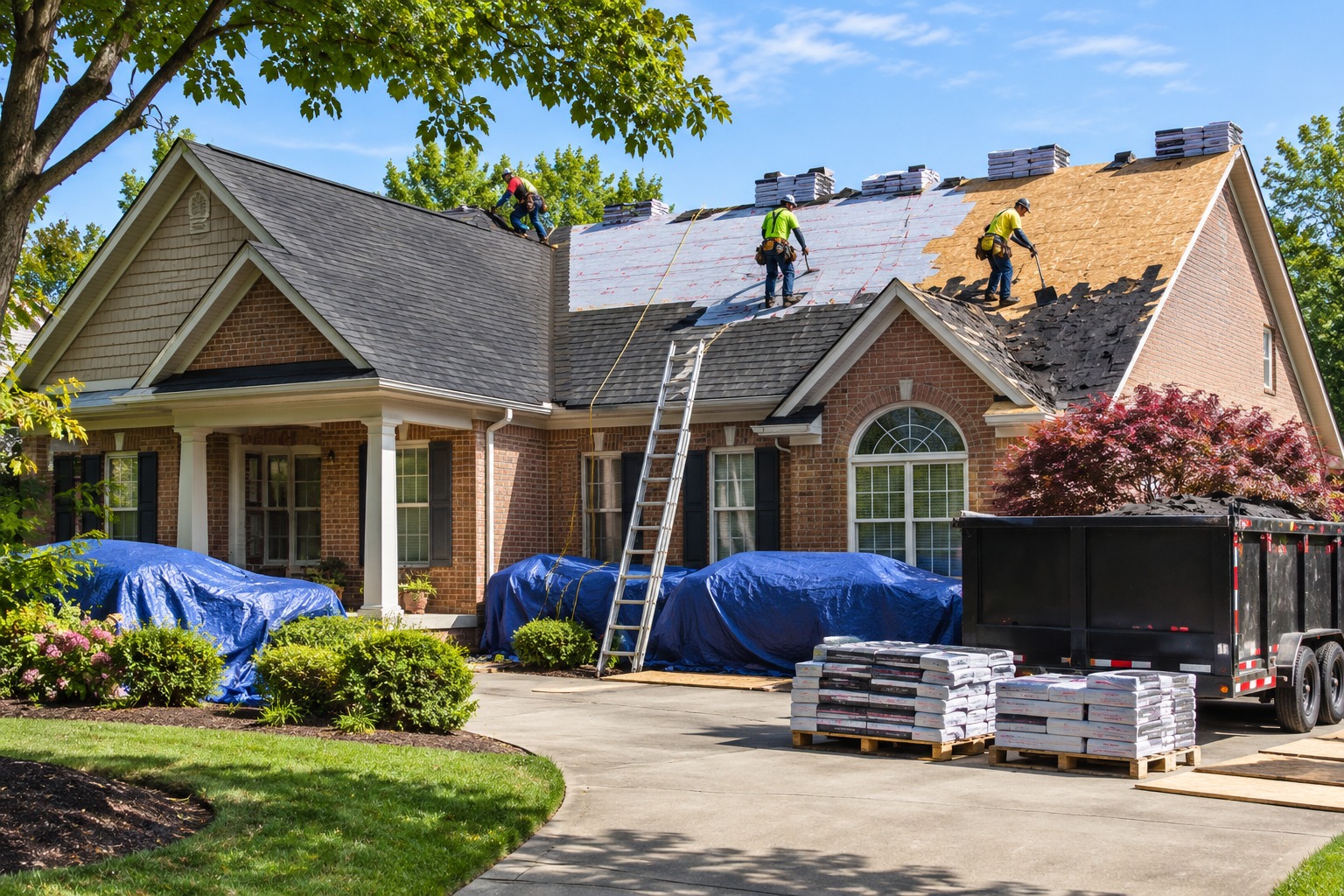
A roof replacement in Winston-Salem starts with a physical inspection and ends with a clean yard and a documented, watertight roof. This walkthrough shows how a full replacement is done, from tear-off and decking checks to the materials suited to humid summers and fast-moving storms.
Winston-Salem roofs deal with long, humid summers, heavy rain, and thunderstorms that can arrive quickly. Those conditions shape every decision on a replacement, from the shingle to the underlayment to the way ridge vents move hot air out of the attic.
What Does a Roof Replacement in Winston-Salem Involve?
A full roof replacement in Winston-Salem means stripping the old roof to bare decking, repairing damaged boards, installing underlayment and waterproofing, laying wind-rated, algae-resistant shingles, and finishing with ridge vents, flashing, and a magnetic nail sweep. Most projects take one to three days.
Why Climate Matters for a Winston-Salem Roof Replacement
Local weather decides which materials and details hold up. Humidity feeds algae, rain tests every seam and valley, and wind finds weak fastening. A roof built for the baseline conditions here lasts longer than one copied from a milder market.
How Much Rain a Roof Sheds
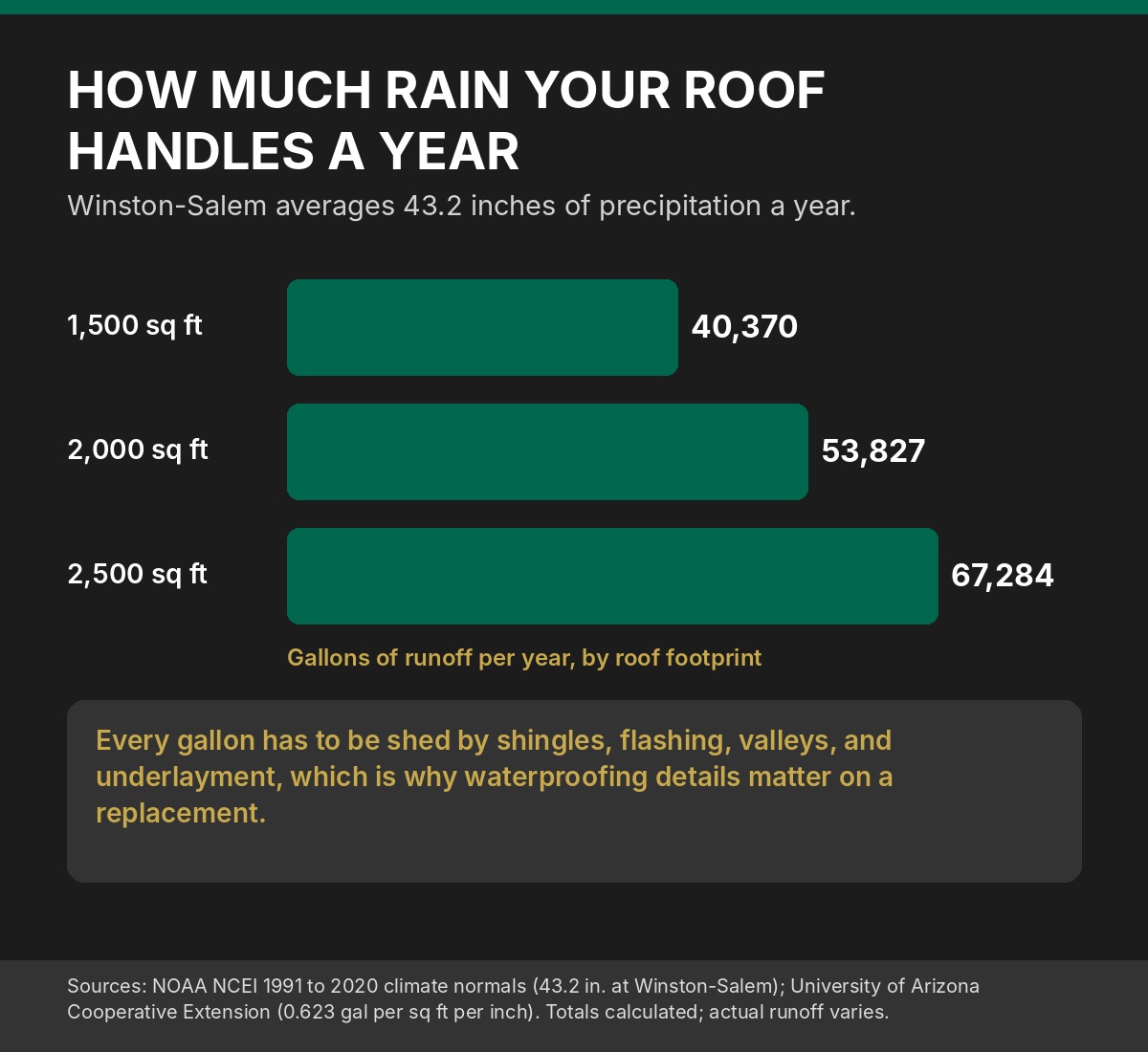
According to NOAA climate normals, Winston-Salem averages about 43 inches of precipitation a year. Using the University of Arizona Cooperative Extension factor of 0.623 gallons per square foot per inch of rain, a 2,000 square foot roof sheds more than 50,000 gallons a year. Underlayment, flashing, and valley waterproofing are what keep that water out of the house.
Humidity and Algae on Shingles
Warm, damp summers encourage blue-green algae, which causes the black streaks seen on many roofs. Shingle manufacturers address this with algae-resistant granules that contain copper, and they typically back that feature with a limited algae warranty. Choosing an algae-resistant shingle is a baseline decision for a humid climate, not an upgrade. Because algae thrives where roofs stay damp, shaded slopes under tree canopy are usually the first to streak, so the crew also checks for debris that holds moisture against the roof.
Storm Season, Ice, and Roof Edges
Fast-moving thunderstorms push wind-driven rain into any gap, and the occasional ice event exposes weaknesses in valleys, around chimneys, and along roof edges. That is why waterproof membrane goes in the places water is most likely to back up, not just across the open field of the roof.
Wind Ratings and Fastening
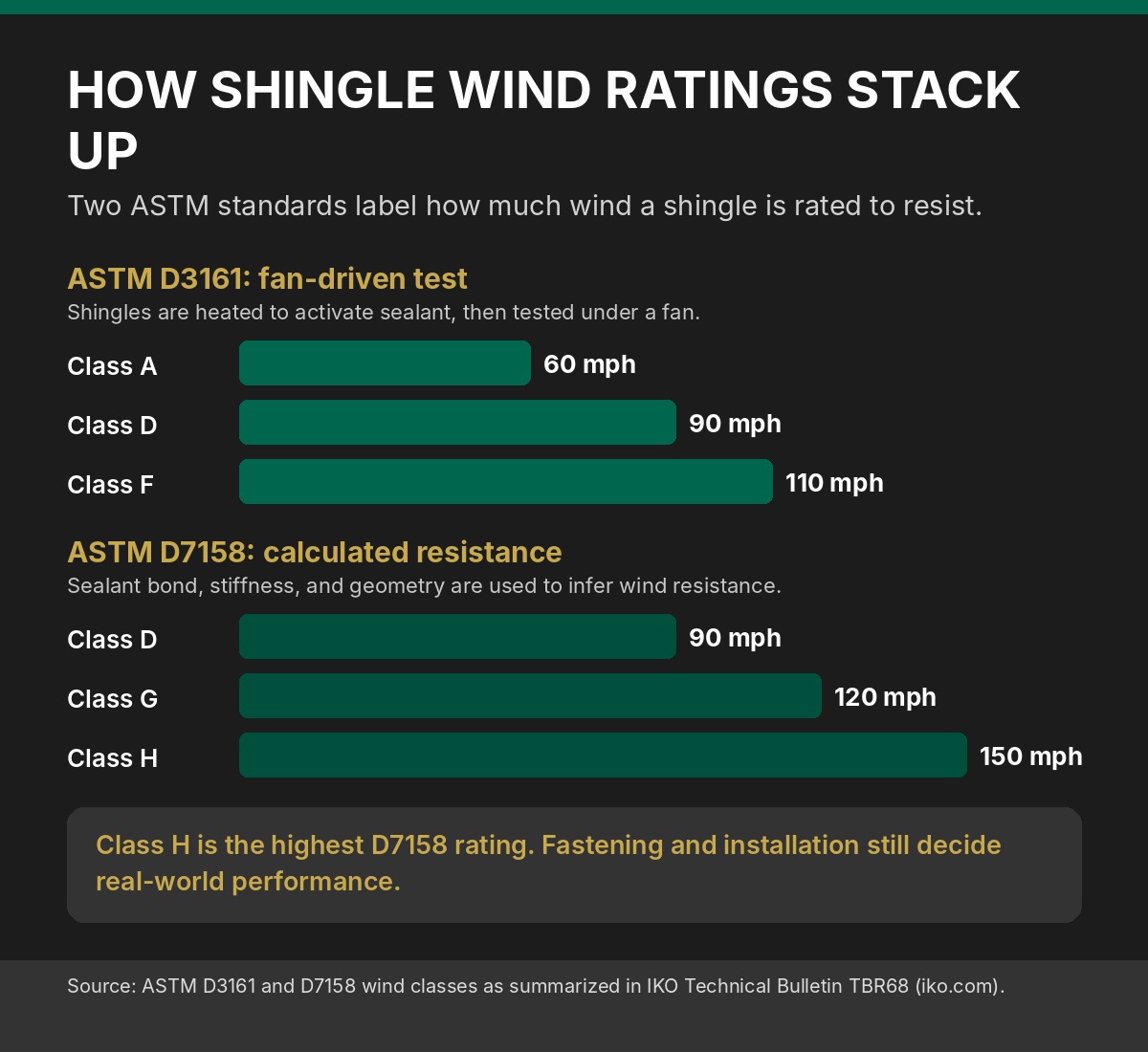
Shingle wind resistance is labeled under two ASTM standards: D3161, a fan-driven test with classes up to F at 110 mph, and D7158, a calculated rating with classes up to H at 150 mph. A high rating helps, but fastening pattern and sealant activation decide how a roof performs in a real storm, which is why nailing and installation quality matter as much as the label.
Roof Replacement in Winston-Salem: Step by Step
A complete replacement is a systematic process, not a layer swap. Every component, from the wooden decking underneath to the protective layers above, has to work together, and skipping any step creates a weak point that shows up in the next storm.
Roof Replacement in Winston-Salem: Site Setup and Protection
Before any shingle comes off, the crew covers landscaping, shrubs, and exterior features with tarps, protects the driveway, and stages magnetic nail sweeps for the final pass. Setup typically takes a couple of hours, and it protects the homeowner’s property while keeping the job organized before the heavy work begins.
Tear-Off and Decking Inspection
The crew strips every layer of old material down to bare wood, because nothing should be covered over. Then every board is inspected. Soft spots, discoloration, and rot mean those sections are replaced before anything else goes down, since new shingles over a weak deck only postpone the same failure.
Underlayment, Ice and Water Membrane, and Shingles
Once the deck is confirmed solid, a waterproof membrane goes along the eaves, valleys, and penetrations, followed by synthetic underlayment across the deck. Shingles are installed from the eaves upward in a staggered pattern that seals out water at every course.
Ridge Vents, Flashing, and Cleanup
Ridge vents and flashing get attention last, because those junctions are the most likely to fail if the crew rushes. Balanced attic airflow lets hot air leave the attic in summer, which reduces heat buildup and helps shingles last. The job ends with tarps removed, debris hauled away, and a magnetic sweep across the yard and driveway to collect stray nails.
What a High-Performance Roof System Includes
A roof system built for a humid, storm-prone climate combines several layers, and each one has a job.
| Component | What It Does |
|---|---|
| Architectural shingles with a high wind rating | Resist wind uplift and shed water |
| Algae-resistant granules | Help prevent black streaking in humid conditions |
| Synthetic underlayment | Adds moisture resistance beneath the shingles |
| Ice and water membrane | Protects valleys, chimneys, and eaves where water backs up |
| Ridge vents | Exhaust hot attic air and reduce heat buildup |
What Happens When the Crew Finds Hidden Damage?
When old shingles come off and the crew finds rotted decking, failing flashing, or a poorly done patch, the right move is to stop and show the homeowner. We document what we found, explain the options, and agree on the next step before any added work begins. Problems buried under new material show up again within a few years.
Many hidden issues trace back to slow leaks, so catching them early with a targeted roof repair can sometimes avoid a full replacement.
Repair or Replace? How to Tell
Cosmetic wear is a different problem from structural compromise. A few missing shingles or light staining may only need a repair, while widespread damage points toward replacement. A documented roof inspection settles the question with facts.
| What You See | Usually Means |
|---|---|
| A few missing shingles or minor staining | Cosmetic or localized wear, often repairable |
| Widespread curling, bald patches, heavy granule loss | Shingles near the end of their service life |
| Sagging roof plane or soft spots | Structural decking problems |
| Ceiling stains or repeated leaks | Water is getting past the roof system |
Winston-Salem Roof Replacement FAQs
How long does a roof replacement take in Winston-Salem?
A standard replacement often takes one to three days, depending on roof size, complexity, and weather. Damaged decking found at tear-off adds time, and that time is worth taking, because new shingles over weak boards fail early.
How do I know if I need a replacement or a repair?
A physical inspection is the most reliable way to know. A few leaks or missing shingles can often be repaired, while widespread curling, bald patches from granule loss, or visible sagging usually mean replacement is the more durable choice.
Will homeowners insurance cover a new roof?
It depends on your policy and the cause of damage, because storm damage is typically treated differently than gradual wear. We can help document storm damage and work alongside your adjuster, but your carrier makes the final coverage decision.
What are the best roofing materials for a humid climate?
Architectural asphalt shingles with algae-resistant granules and a strong wind rating are a common choice. Metal roofing is also worth considering for longevity, and it is installed on concealed clips that let panels expand and contract without buckling.
How do you protect my yard during a replacement?
Tarps and catch-all protection go down before tear-off to shield plants, shrubs, and the lawn from falling debris. Before the crew leaves, a magnetic sweep covers the whole work area to collect stray nails.
What happens if it rains during my roof replacement?
Work pauses for rain, and a prepared crew tarps any open deck to keep the interior dry until conditions clear. A reputable contractor watches the forecast, schedules around it, and contacts you with an updated plan instead of leaving you guessing about the state of your roof overnight.
How should I prepare my home for a roof replacement?
Clear the driveway, move patio furniture and potted plants away from the roofline, and take framed pictures and mirrors off walls below the roof, since hammering vibration travels through the house. Keep children and pets indoors during tear-off, which is the loudest phase.
Do I need to be home during the project?
You do not need to be home for the whole job, but you should be reachable. The crew may need driveway or attic access, and if hidden damage turns up, they will need a quick decision from you before continuing.
Is a roof replacement worth it compared with repeated repairs?
When damage is widespread, repeated repairs add up without fixing the underlying wear, and each leak can soak decking and insulation. A full replacement resets the roof system, and an inspection shows whether your roof is at that point.
Get an Honest Look at Your Roof
A roof is easy to ignore until water shows up inside. A professional evaluation before storm season, or after a rough one, gives you a clear baseline of what is holding up and what needs attention now.
The team at Tip Top Roofing offers full tear-off and reroofing, and our roofing services for homeowners cover repairs, inspections, and system upgrades. We will walk you through what we find and lay out your options, and the decision is always yours.
Wondering whether we cover your neighborhood? Browse the communities we serve, or see the Kernersville office for local details.
Request your roof inspection or call (336) 922-3325.